

User Score
0 votes
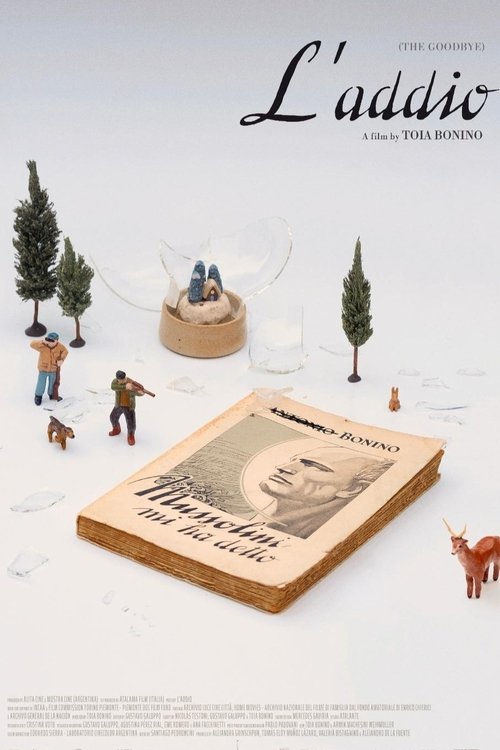
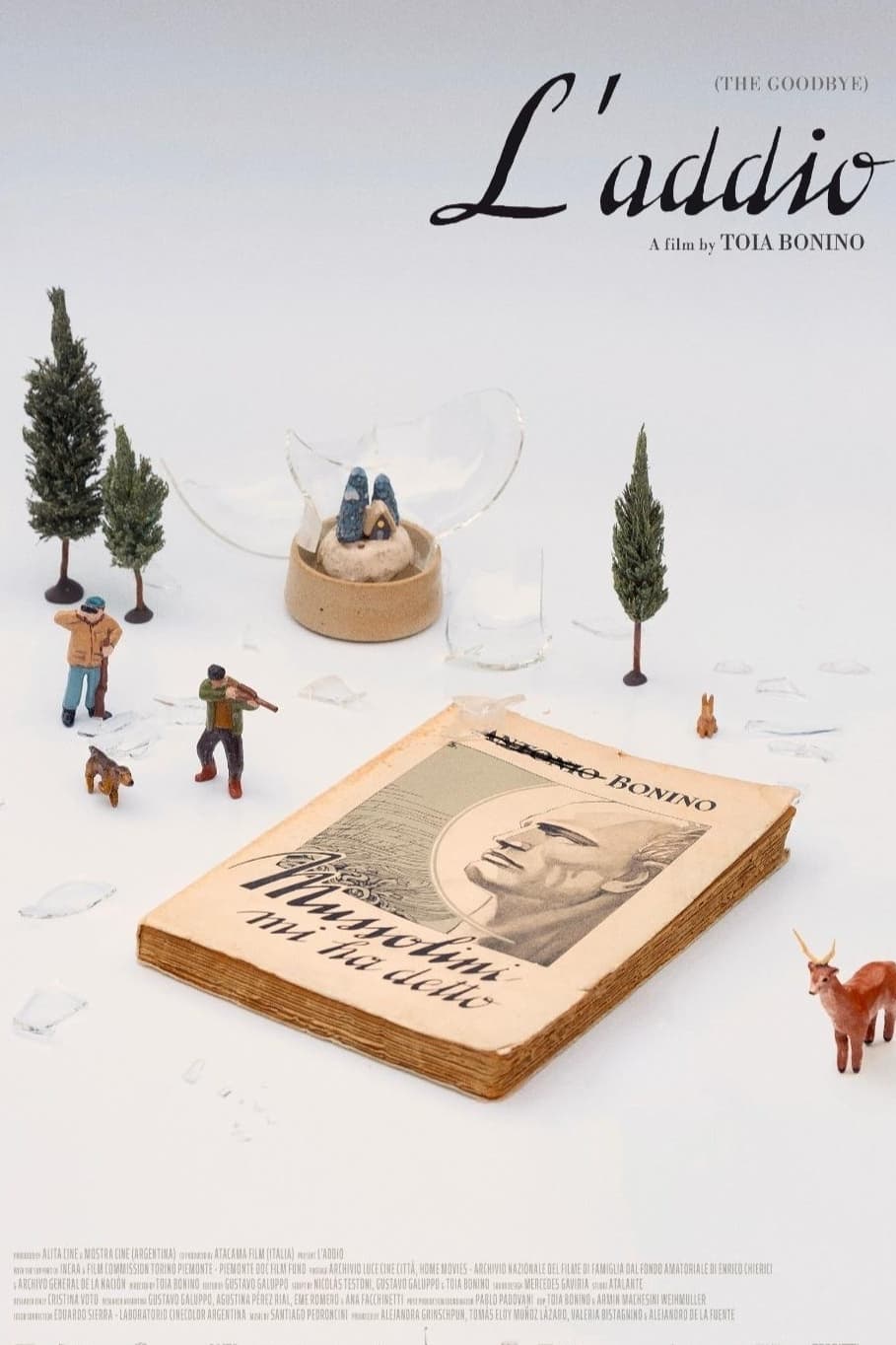
After the death of her grandfather, Antonio Bonino, Toia found six negatives proving that he was a member of the Fascist Party and an aide to Benito Mussolini. Influenced by this discovery, the director sets out to trace her male family lineage, whom the end of World War II brought to Argentina. Instead of a clarification, however, the past crumbles and disintegrates into a mosaic of archival material, family films, excerpts from personal diaries and fragments of the works of Roberto Rossellini or Luchino Visconti. But it is the meanings that emerge from the combination of disparate images that offer answers and fill the information vacuum that has shaped generations of the family. The dynamics of the Bonino family's male-female relationships have a much darker basis than the social context of the time. In the story of grandfather, father, cousins and sons, Toia also finds a story of identity and of the role of wives, mothers, grandmothers and daughters in a history shaped by men.
Status
Released
Original Language
ES

When Allied forces liberated the Nazi concentration camps in 1944-45, their terrible discoveries were recorded by army and newsreel cameramen, revealing for the first time the full horror of what had happened. Making use of British, Soviet and American footage, the Ministry of Information’s Sidney Bernstein (later founder of Granada Television) aimed to create a documentary that would provide lasting, undeniable evidence of the Nazis’ unspeakable crimes. He commissioned a wealth of British talent, including editor Stewart McAllister, writer and future cabinet minister Richard Crossman – and, as treatment advisor, his friend Alfred Hitchcock. Yet, despite initial support from the British and US Governments, the film was shelved, and only now, 70 years on, has it been restored and completed by Imperial War Museums under its original title "German Concentration Camps Factual Survey".
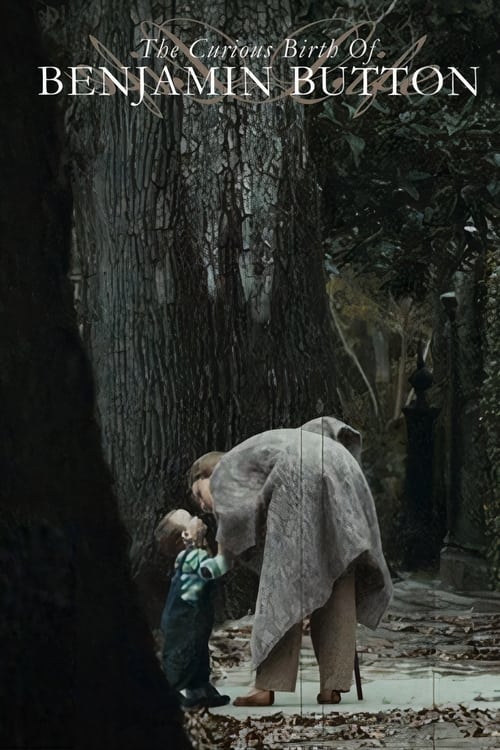
A documentary about the making of David Fincher's 2008 film THE CURIOUS CASE OF BENJAMIN BUTTON. Virtually every element in the evolution of the Fincher's film is documented here, from the project's attachment to numerous other directors during the 1990s, to its shoot in 2006 and 2007 in New Orleans, to its complex, CGI-intensive postproduction process.