
User Score
18 votes
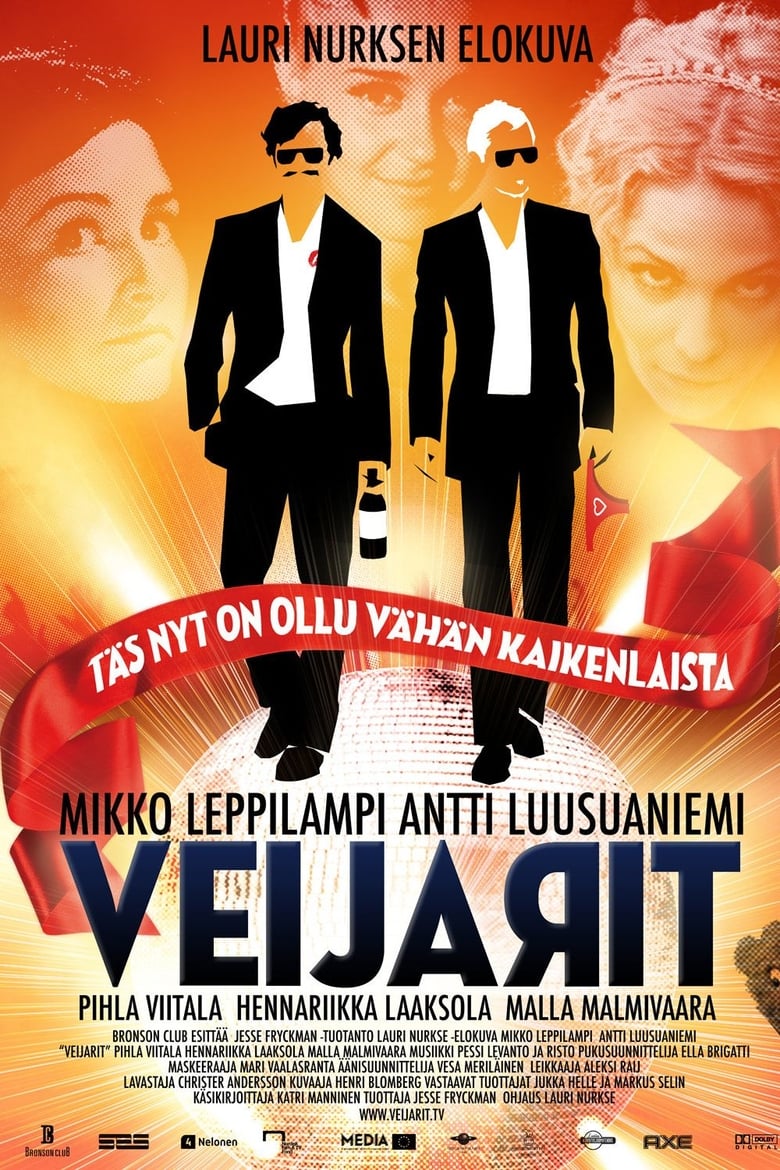
The director Lauri Nurkse tells that Veijarit is a film about "arjensietokyvyttömyys" (= inability to tolerate everyday life) and about the Peter Pan complex. The main actor Mikko Leppilampi says it's about "kolkyttoistavuotiaat" (= thirtyeenagers = people of thirty behaving like teenagers). An immediate reference point is the commedia all'italiana of the 1950s and the 1960s, the black comedy often exposing the infantile stage of development of the Italian male. Saku and Ässä are anti-heroes, but we never fail to sense the humanity behind their shallow and crazy ways. Veijarit is a satire and a parody of a superficial way of life, but there is a vitality in the protagonists that we feel can lead them to a more meaningful stage of existence after the prolonged youth full of sound and fury. There is a motif of transcendence in the imagery of flying: will the balloons carry me or will they burst.
Director
Writer
Status
Released
Original Language
FI
Vilma
Jon Katz is close to burnout. He's a writer with writer's block; his wife has left for her sister's because he's emotionally distant; he rarely answers his phone. A kennel sends him a border collie that's undisciplined because of abuse. Despite a series of mishaps, Jon decides to keep trying with the dog, and he rents a dilapidated farm house to give the dog room to run. A local handyman refers Jon to a woman who might be able to help him train the dog. Reluctantly, Jon gives her a try. Is the dog the problem, or the owner?