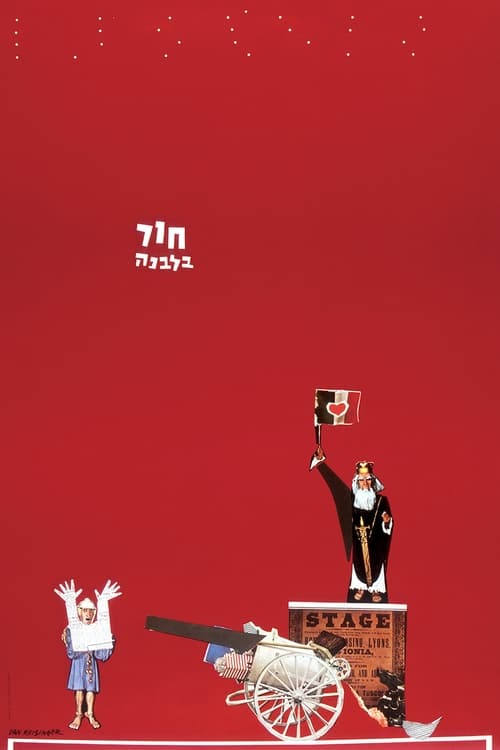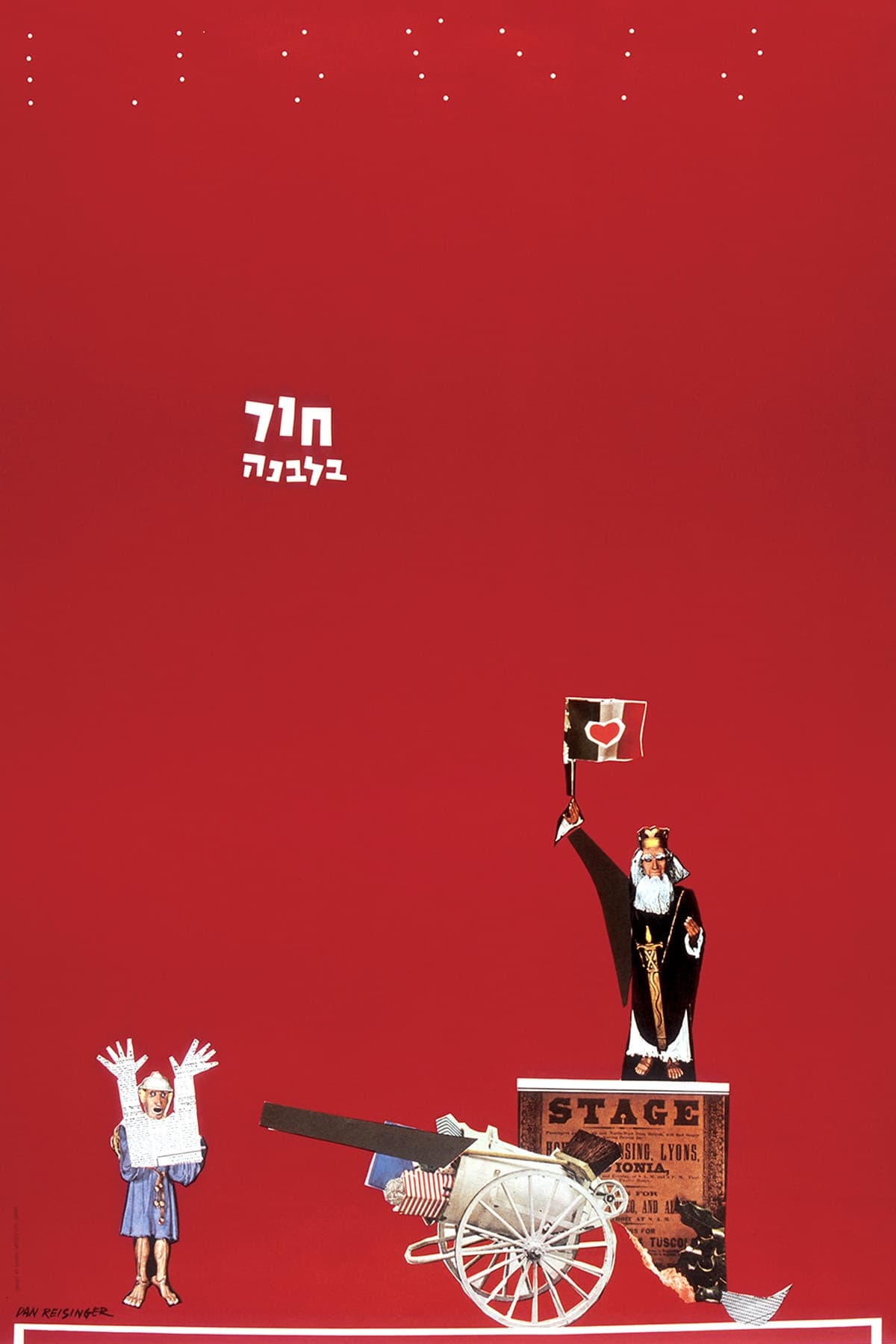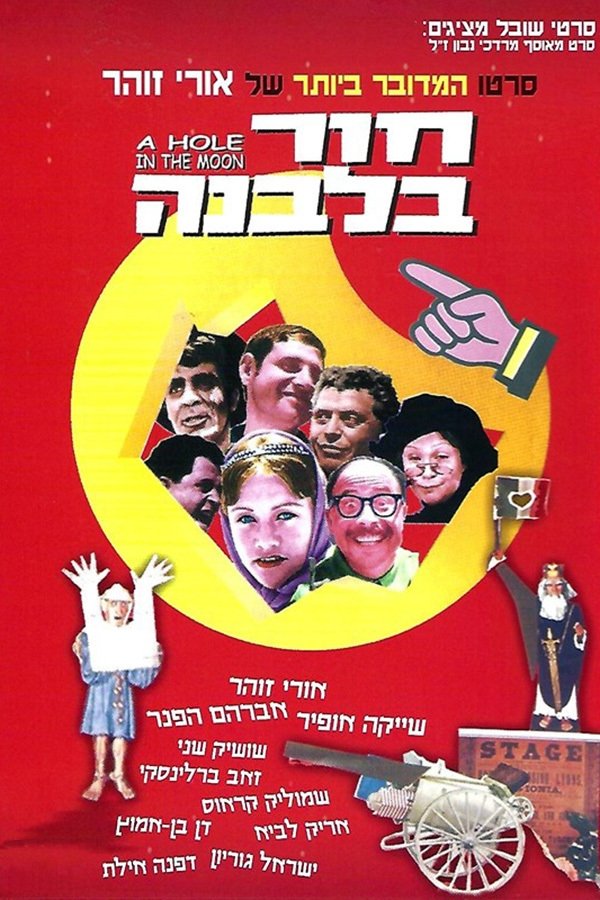
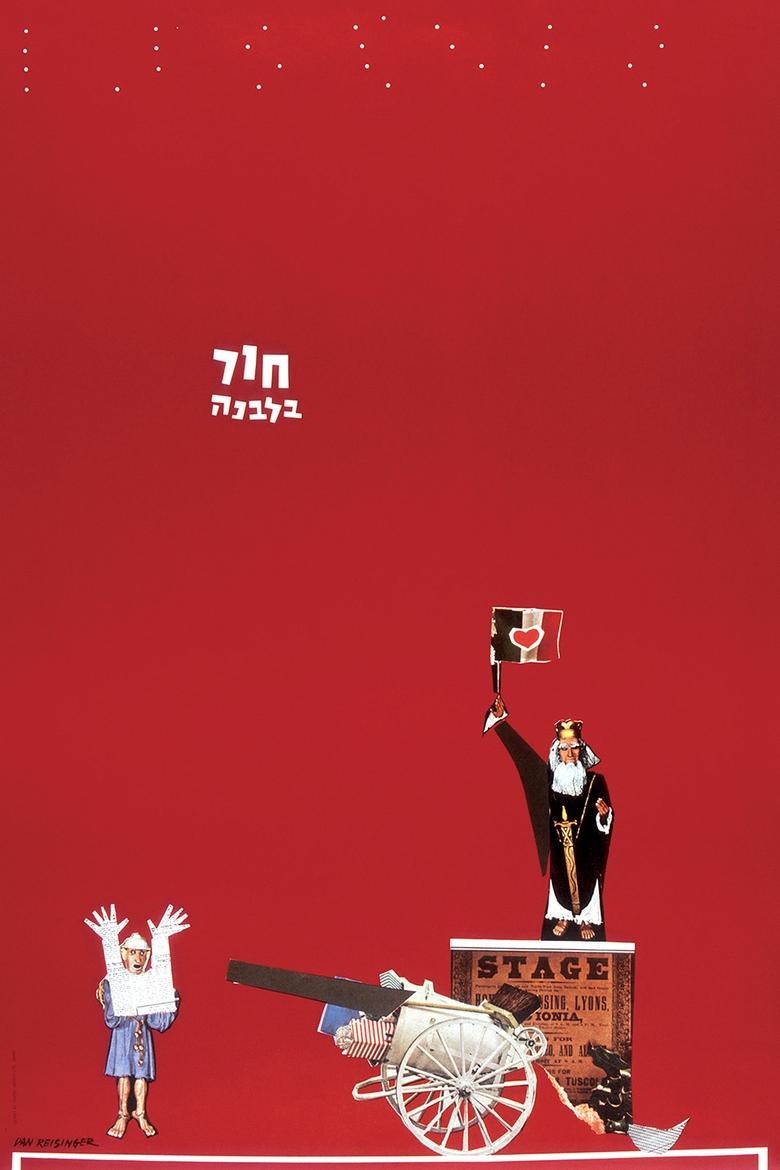
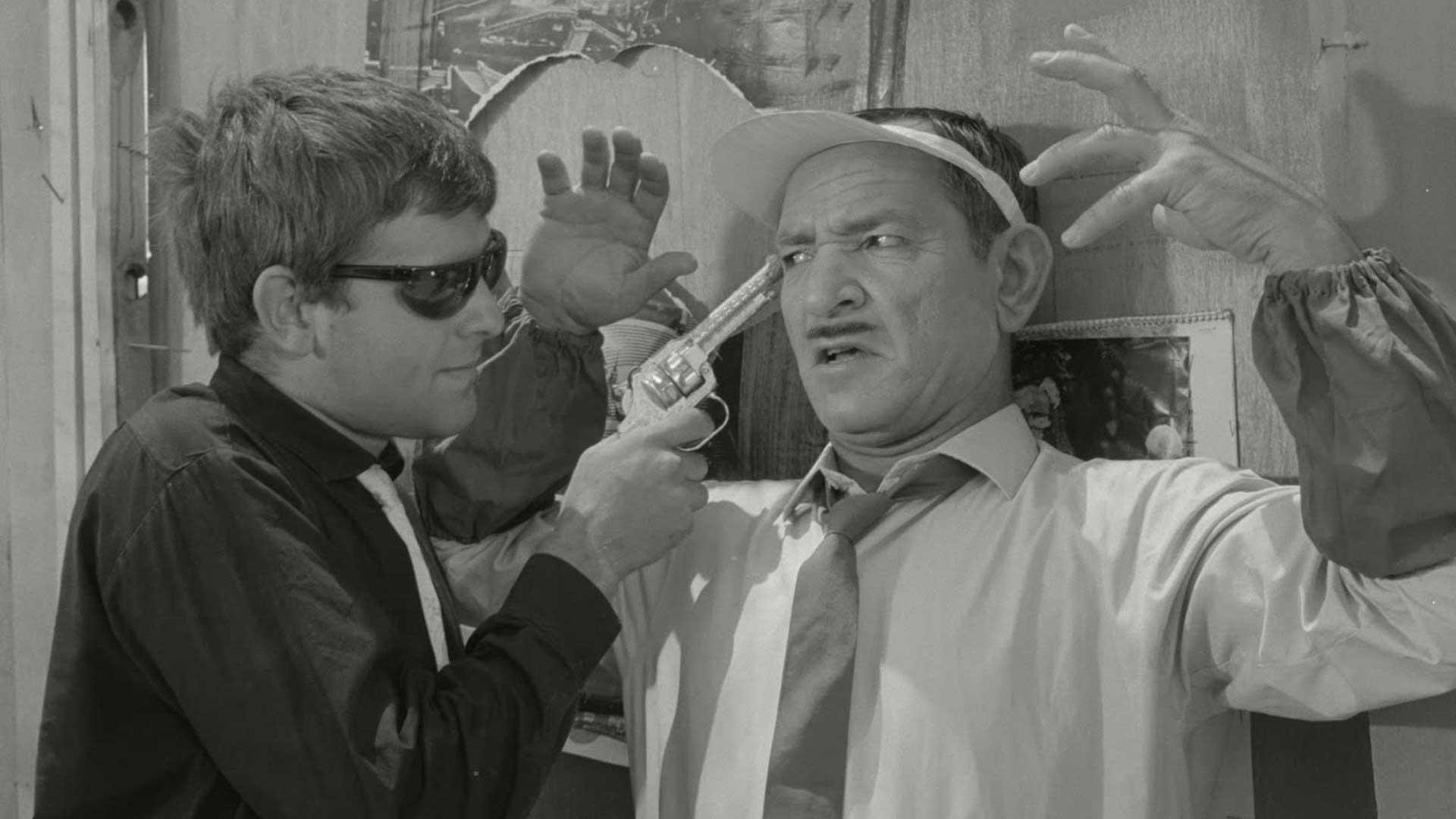
A comic and episodic satire, the film uses improvisation to illustrate the clash between fantasy and reality in real life. Although conceived in the style of Mekas’ “Hallelujah the hills” (1962), it’s an authentically Israeli satire, an openly rebellious and individualistic expression that poked fun at the sacred myths of earlier zionist films. The technique of film within the film is used to portray cinema as reflection of the imagination, a miracle based on dreams and fantasies that take on concrete characteristics – parallel to the miracle of Israel, the dream that has become reality. Although not a commercial success, its importance is beyond any measure, though it remains a unique experiment, boldly uncommercial and subversive, out of any context in that patriotic, ideological epoch.
Director
Writer
Status
Released
Original Language
HE
Danny Masterson (TV's 'That '70s Show') leads a hilarious ensemble cast in a tale about two hapless stoners who get involved in a scheme to rip off a shady character named Mr. Big after the duo sours on rehab.