
User Score
8 votes
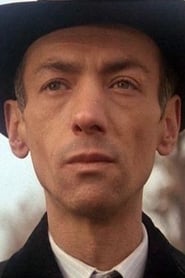
Two interconnected stories in the 1930s, one set in Berlin, the other in Palestine: Mania Vilbouchevich Shohat (1880-1961), called Tania, a Russian Jew and revolutionary, goes from Minsk to Palestine to live on a collective. She promotes feminism and laments a shift in the men from self-defense to aggression. Her friend, Else Lasker-Schuler (1869 - 1945), expressionist poet and German Jew, is in Berlin, writing, caring for her son, watching Hitler's movement take power. She goes to Jerusalem and imagines a park for Arab and Jew. Her poems, voiced from within, capture her experience. The film meditates on the violence at the root of Israel's birth: of the Nazis and of the Zionists.
Status
Released
Original Language
HE
Editor
An American-born Jewish adolescent, Hannah Stern, is uninterested in the culture, faith and customs of her relatives. However, she begins to revaluate her heritage when she has a supernatural experience that transports her back to a Nazi death camp in 1941. There she meets a young girl named Rivkah, a fellow captive in the camp. As Rivkah and Hannah struggle to survive in the face of daily atrocities, they form an unbreakable bond.